
Supportive counselling for anxiety, depression, infertility, loss, and maternal well-being in Edinburgh, Marchmont, Bruntsfield, surrounding areas, and online
Blog

Finding Space to Breathe: How Architecture and Environment Shape Our Emotional Health
The Slang of Suffering
Am I stressed or am I anxious?
A summary of The Nottingham Maternity Review 2026
The final report of the Independent Review of Maternity Services at Nottingham University Hospitals (NUH) NHS Trust, led by senior midwife Donna Ockenden, was published on Wednesday, 24 June 2026.
As the largest inquiry of its kind in NHS history, it is a deeply significant and heavy news story that demands thoughtful reporting.
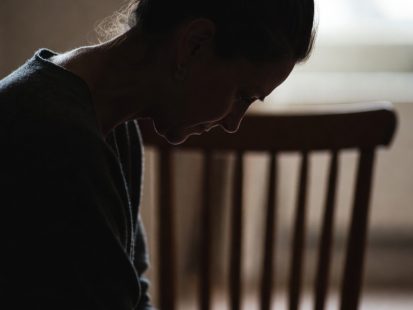
The incomprehensible pain of miscarriages, infertility and baby loss.
Stress Awareness Month
From the Braai to the Bothy: The Emotional Journey of the South African Expat in Scotlan
Moving across the world is a brave endeavor, but it is also one of the most taxing experiences a person can go through. For South African expats landing in Scotland, the transition is a study in contrasts—swapping the Highveld sun for the haar (sea mist), and the familiar sounds of home for a beautiful, but often baffling, new dialect.
Greener Avenues Therapy can help you to explores the unique "Saffa" experience of settling in Scotland and how professional support can bridge the gap.
Setting up a new life in Scotland as a South African is often described as an "adventure of a lifetime." And in many ways, it is. There is the safety of the streets, the rugged beauty of the Highlands, and the thrill of a world-class city like Edinburgh.
But beneath the excitement of the "move of a decade" lies a complex layer of emotional work. At Greener Avenues Therapy, I understand that moving countries isn't just about shipping containers and visas—it’s about the quiet, heavy task of rebuilding your identity in a place that doesn't yet know your name.
The Unique Challenges for Saffas in Scotland
While the "Saffa" spirit is famously resilient, the transition to Scotland brings specific hurdles that can wear down even the most optimistic traveler:
-
The Sensory Shift: Coming from a land of intense light and outdoor living, the Scottish winter—with its 4:00 PM sunsets and relentless rain—can lead to more than just a Vitamin D deficiency. It can impact your mood, energy levels, and sense of motivation.
-
The "One Foot in Each World" Struggle: Thanks to WhatsApp and social media, you are never truly "gone" from South Africa. You might be physically in a coffee shop in Marchmont, but emotionally you are at a family Sunday lunch in Cape Town. This "ambiguous loss" can make it hard to fully land in your new life.
-
Cultural "Reservedness": South African culture is often direct, warm, and loud. The British (and specifically Scottish) tendency toward politeness, understatement, and "not wanting to be a bother" can sometimes feel like coldness or rejection, leading to deep feelings of isolation.
-
The Loss of Status: You may have left behind a senior career, a wide social circle, and a deep knowledge of "how things work." Starting from zero—learning how to book a GP appointment, navigate a roundabout, or build a credit score—can leave you feeling like an "imposter."
How Greener Avenues Therapy Can Help
At Greener Avenues, I don't just see the "expat" label; I see the person behind the move. Therapy can be a vital "anchor" during your first few years in Scotland.
Our approach helps you:
-
Navigate Migratory Grief: Giving you permission to mourn the things you miss—the smell of the rain on hot dust, the ease of family proximity, and the version of yourself you left behind.
-
Bridge the Cultural Gap: Using (CBT) Cognitive Behavioural Therapy to challenge the "unhelpful thoughts" that arise when you feel misunderstood or out of place in Scottish social settings.
-
Manage Seasonal Affective Disorder (SAD): Developing practical tools and routines to protect your mental health during the darker, colder months.
-
Rebuild Your Narrative: Helping you integrate your South African heritage with your new Scottish life, so you don't feel like you've lost yourself, but rather that you are "expanding" who you are.
You Are Building More Than a Life; You Are Building a Future
Emigrating is a marathon, not a sprint. If you find yourself feeling bitter, lonely, or overwhelmed by the "admin" of starting over, remember that it is okay to ask for a guide.
Whether you are based in Edinburgh or joining me online, Greener Avenues Therapy offers a confidential, non-judgemental space to process the "Saffa-in-Scotland" experience. Let’s work together to make your new avenue a little greener.
Who Was I Before? Navigating the Loss of Identity in Parenthood
We talk a lot about what a baby gains when they enter the world: a home, a family, a future. But we rarely talk about what a parent loses.
At Greener Avenues Therapy, I often hear parents describe a strange, lingering grief. It’s not that they don’t love their child—it’s that they feel they’ve lost the person they used to be. If you feel like your "self" has been swallowed whole by the role of "Mom" or "Dad," you aren't alone, and you aren't doing it wrong.
The "Matrescence" and "Patrescence" Shift
Just as an adolescent goes through puberty, a person becoming a parent undergoes a massive neurobiological and psychological transformation. Scientists call this matrescence (for mothers) or patrescence (for fathers).
It is a total restructuring of the brain and the spirit. Almost overnight, your autonomy, your schedule, your professional confidence, and even your body belong to someone else. It is a "becoming," but it is also an unravelling.
Why the Loss Feels So Heavy
The "Identity Gap" happens when the person you were (spontaneous, career-driven, social, rested) feels incompatible with the person you are now (scheduled, exhausted, hyper-focused on a tiny human). This gap can lead to:
-
A Sense of Invisibility: Feeling like you are now "just a caregiver" rather than an individual with interests and opinions.
-
Grieving Your Freedom: Missing the ability to simply walk out the door or finish a hot coffee.
-
Professional Dissonance: Struggling to reconcile your "ambitious self" with your "parenting self."
-
Social Isolation: Feeling like your friends who don't have children "don't get it," while your friends with children are too busy to talk.
Finding Your Way Back to "You"
At Greener Avenues Therapy, I don't believe the goal of parenthood is to delete your old self. The goal is integration. You aren't going back to the old version of you, but you aren't "gone" either. You are evolving.
Through perinatal counselling, I help you:
-
Mourn the Old Life: It is okay to miss your freedom. Acknowledging that grief is the first step toward healing.
-
Set Boundaries: Learning that "self-care" isn't a luxury—it’s a necessary boundary that keeps you whole.
-
Identify Your Core Values: Rediscovering what makes you you, outside of your role as a parent.
-
Build a New Narrative: Shifting from "I've lost myself" to "I am expanding myself."
You Are More Than "Just" a Parent
Your child needs a healthy, whole version of you—not a hollowed-out version. If you feel like you’re drowning in the "to-do" lists of parenthood and losing sight of the person in the mirror, let’s talk.
At Greener Avenues, I help you navigate the winding paths of identity so you can feel like yourself again—maybe even a stronger, more resilient version than before.
The Quiet Marathon: Navigating the Emotional Weight of Infertility
For many, the dream of starting a family is met not with a celebration, but with a calendar full of appointments, a bathroom cabinet full of tests, and a heart full of "what ifs."
Infertility is often described as a "silent" struggle. It is a unique kind of grief—a mourning for a future that hasn’t happened yet, and a loss that many around you may not fully understand. At Greener Avenues Therapy, I know that while the medical side of infertility is managed by doctors, the emotional side requires a different kind of care.
The Invisible Toll of the Journey
Infertility is more than just a physical hurdle; it is a full-body emotional experience. It can impact every corner of your life:
-
The Identity Crisis: Feeling like your body is "failing" you or struggling to see yourself outside of the "hopeful parent" label.
-
The Relationship Strain: Couples often process grief differently. One may want to talk constantly, while the other retreats into silence, creating a gap when you need each other most.
-
Social Isolation: The sting of seeing pregnancy announcements on social media or the exhaustion of "putting on a brave face" at baby showers.
-
The "Wait" Fatigue: Living your life in two-week increments, caught between hyper-vigilance and hope.
Reclaiming Your Narrative at Greener Avenues Therapy
Infertility can make you feel like your life is on hold. Counselling isn't about "fixing" the outcome; it’s about supporting you while you navigate the process.
In our sessions, we provide a dedicated space to:
-
Process Reproductive Grief: Acknowledging that every negative test or failed cycle is a real loss that deserves to be felt and honored.
-
Manage "Medical Trauma": Navigating the invasive nature of IVF, IUI, and constant testing can leave you feeling disconnected from your own body. We work to ground you.
-
Navigate Decision Fatigue: Whether you are considering donor eggs, adoption, or deciding when to stop treatment, we provide a neutral, supportive space to explore your options without pressure.
-
Rebuild Self-Compassion: Learning to be kind to your body and your mind, even when the journey feels unfair.
There is a Place for Your Story
At Greener Avenues Therapy, I believe you shouldn't have to carry the weight of infertility alone. Whether you are at the beginning of your fertility journey, in the middle of assisted reproduction, or exploring different paths to parenthood, I am here to walk with you, down Greener Avenues.
The road may be winding, but you don't have to navigate the avenues of infertility in the dark, or alone.
Perinatal Mental Health: what is it all about?
More Than the "Baby Blues": Understanding Perinatal Mental Health
When we think about bringing a child into the world, we often focus on the physical: the nursery setup, the birth plan, or the hospital bag. But there is another landscape just as vital to navigate—your mental and emotional well-being.
At Greener Avenues Therapy, I believe that "the path to parenthood" isn't always a straight line. Whether you are currently pregnant, navigating the first year of your child’s life, or struggling with the complex grief of infertility, your mental health deserves a dedicated space.
What is Perinatal Mental Health?
The term "perinatal" refers to the period from the start of pregnancy through the first year after childbirth. Perinatal Mental Health (PMH) encompasses the emotional well-being of parents during this window. While many have heard of "Postpartum Depression," PMH is actually a broad spectrum that includes:
-
Perinatal Anxiety: Excessive worry, racing thoughts, or a constant sense of dread.
-
Perinatal Depression: Persistent sadness, loss of interest in things you once loved, or feeling "numb."
-
Perinatal OCD: Intrusive, repetitive thoughts (often scary or distressing) and behaviors intended to reduce that anxiety.
-
Birth Trauma: Processing a delivery or pregnancy experience that felt frightening or out of control.
-
Infertility & Loss: The unique mental health challenges that arise when the journey to parenthood is met with obstacles, medical intervention, or grief.
Why It’s Different (and Why It Matters)
It is completely normal to feel overwhelmed. However, there is a significant difference between the "Baby Blues"—which typically resolve within two weeks of birth—and a perinatal mood disorder.
If you find yourself thinking, "I don't feel like myself," or "I didn't think it would be this hard," please know that you are not failing. You are navigating a massive biological, hormonal, and identity shift.
How Therapy Can Help
At Greener Avenues Therapy, I provide a soft landing spot for these "taboo" feelings. Specialised therapy helps you:
-
Validate your experience: Moving past the guilt of not "enjoying every moment."
-
Develop Coping Tools: Practical strategies to manage intrusive thoughts and anxiety.
-
Heal from the Journey: Processing the trauma of infertility or a difficult birth.
-
Strengthen Bonds: Finding ways to connect with yourself and your baby while you heal.
You Don't Have to Walk This Path Alone
The "avenues" of parenthood can sometimes feel overgrown and difficult to navigate. My goal is to help you clear the path so you can find your way back to yourself.
If you’re feeling lost, I'm here to help you find your footing.

Mother’s Day – Magical vs messy
Mother's Day: Magical vs. Messy - Navigating the Spectrum of Emotions
Happy Mother's Day to all the amazing mums out there! Today is a day to celebrate the incredible love, strength, and sacrifice that mothers everywhere embody. It's a day to cherish the magical moments, the sticky hugs, and the whispered "I love yous" that make motherhood such a profound journey.
But let's be real: Mother's Day isn't always a bed of roses. For many, it can be a challenging day, a day that brings up a rollercoaster of emotions, both magical and messy.
If you're struggling with fertility, Mother's Day can be a painful reminder of what you haven't yet achieved. The sight of happy families and overflowing social media feeds can feel like a personal affront, a stark contrast to your own yearning and hope. Know that your feelings are valid. Take time today to acknowledge your pain, to grieve the losses, and to find solace in the company of those who understand your journey.
For those who have lost a baby, Mother's Day can be a heart-wrenching reminder of the child you never got to hold, the dreams you never got to see come true. It's a day that can bring up a tidal wave of grief, a reminder of the immense love you still carry for your little one. Remember to be gentle with yourself. Take the time to honor your child's memory in whatever way feels right for you. Whether it's lighting a candle, writing a letter, or simply sitting in quiet reflection, your acts of remembrance are a testament to the enduring love you hold.
For those who have lost their own mother, Mother's Day can be a day filled with longing and nostalgia. It's a day that can highlight the emptiness left behind, the absence of the one person who always knew how to make everything right. Take time to cherish the memories you hold, to celebrate the impact your mother had on your life, and to find comfort in the love she still inspires in you.
And for new mums, Mother's Day can be a mix of emotions – joy, exhaustion, and overwhelming responsibility. You may feel like you're barely keeping your head above water, struggling to balance the demands of motherhood with the realities of life. Know that you are not alone. It's okay to feel overwhelmed, to ask for help, and to take time for yourself. This Mother's Day, give yourself the gift of grace. Recognize the incredible job you're doing, the love you're pouring into your little one, and the strength you're finding within yourself.
So, this Mother's Day, let's embrace the spectrum of emotions. Let's celebrate the magical moments and acknowledge the messy ones. Let's lift each other up, offer support, and create a space where everyone feels seen and heard. Remember, motherhood is a journey, and we're all in this together.
For those who may be struggling on this day, please know that you are not alone. There are resources available to support you, and reaching out for help is a sign of strength. Check out organizations like The Miscarriage Association, Tommys, and MIND for support and guidance. And if you're looking for more personalized support, please feel free to reach out to me. I'm here to listen, support, and help you navigate the complex and beautiful journey of motherhood, messy moments and all.